Description
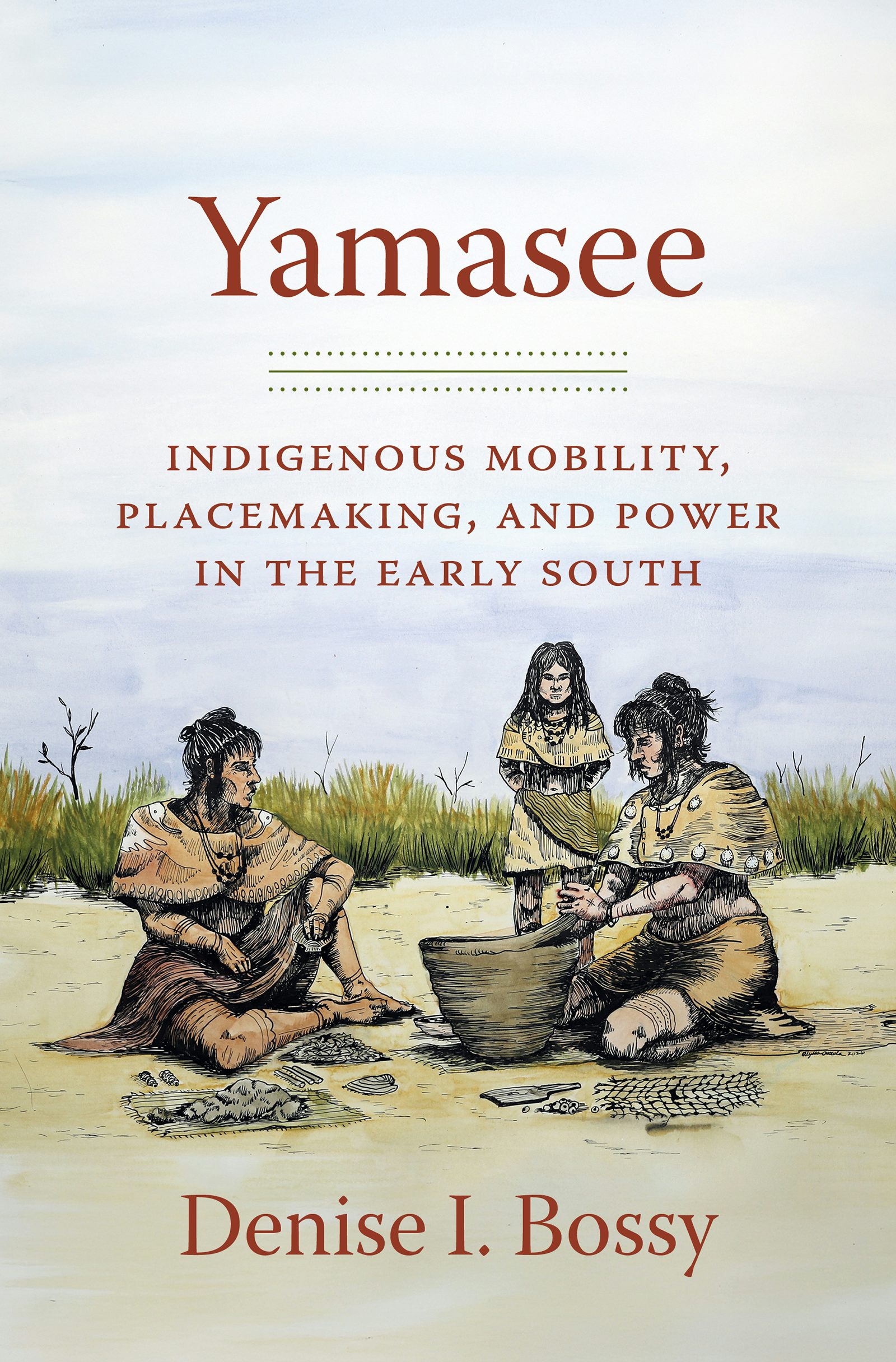
The Yamasees were one of the most powerful forces in the early South. Yet they remain one of the least understood Indigenous nations of the region. In the archaeological record, Yamasee homelands migrate and disappear; in colonial archives, their movements seem fractured and disconnected. Much of this was by their own design, as Denise I. Bossy reveals in Yamasee, the first comprehensive study of the Yamasee Nation. Drawing from their deep ancestral practices, Yamasee men and women crafted a dynamic culture of mobility and placemaking driven by a commitment to sovereignty and self-determination. With each migration, Yamasee matrilines transformed new spaces into homelands, becoming foremost experts of the early Southeast’s changing political, social, and sacred landscapes.
The Yamasee Nation harnessed this powerful strategy to navigate and, at times, leverage the escalating violence that European colonialism unleashed—transforming the South in the process. Yamasee matrilines, moreover, persisted long after the British destroyed their nation, and they are core ancestors to the Miccosukee Tribe of Indians of Florida and Seminole Tribe of Florida today.
About The Author
Denise I. Bossy is professor of history at University of North Florida.
Reviews
“Denise Bossy demonstrates that the Yamasees were far more interesting, and enduring, than the 1715 war that bears their name. Before and after this conflict, the Yamasees remade themselves, using mobility and placemaking to secure a future for themselves despite the catastrophic changes wrought by the colonization of the early South.”—Stephen Warren, University of Iowa
Related titles
Print This Page?