
blog-hero-image blog-hero-image

Uncommon Sense

The Pennsylvania Committee of Safety and the War at Home

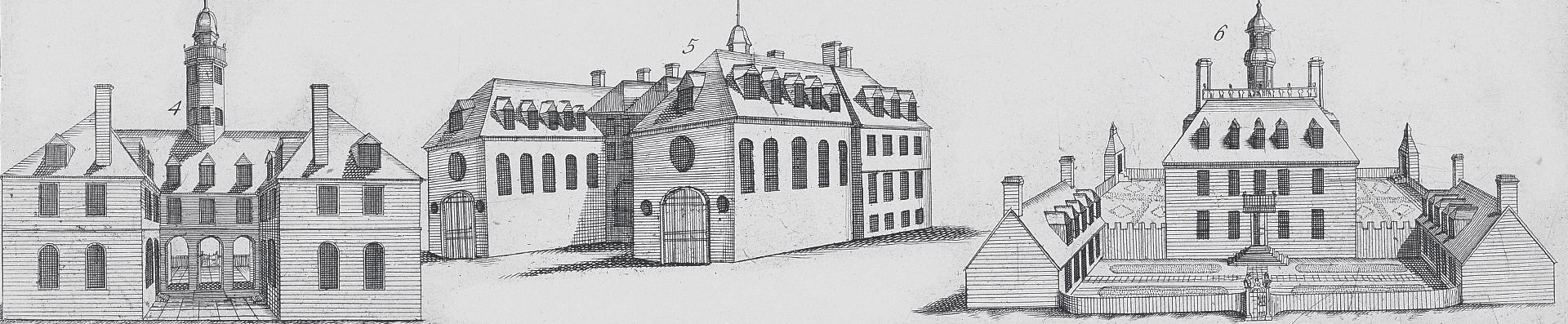
Today's post accompanies "Revolutionary Committees and Congresses," episode 153 of Ben Franklin's World and part of the Doing History 2: To the Revolution! series. You can find supplementary materials for the episode on the OI Reader app, available through iTunes or Google Play. Ask any revolutionary: there’s an enormous gap between the idea of systemic cultural change and its actual implementation. How do you get the guy who’s just trying to, like, make barrels over here to co-sign something as world-rending as a revolution? For American patriot factions in the 1770s, the burden of bridging the gulf between ideology and practice fell in large part on Committees of Safety. From their inception as enforcement mechanisms for the Continental Association’s mass boycotts of British consumer goods, Committees of Safety were all about the material effects of ideas. They were the ones insisting that it wasn't enough to merely think poorly of British treatment of the Colonies—you had to perform that disapproval for your neighbors or else risk public censure. The whole point of a Committee of Safety, in other words, was to make it clear to ordinary people that potentially abstract questions of international diplomacy were also concrete problems that they had to care about in their everyday lives. Read More
Read More

The Histories of the Revolution

What was the American Revolution? When did it start, why did it start, and did it end with the Treaty of Paris… or the Constitution, or is it still unfolding?  These seem like simple questions, but Americans have been debating the answers since the Continental and British armies were still on the battlefield. Over the past century,  historians have argued that the Revolution was political, ideological, social, cultural. Some have claimed that revolutionary  ideas mattered most; others have explored the ways in which revolutionary  ideals fell short in practice for many Americans. Read More

Read More

Framing Early American Scholarship

In today’s post, Jeffrey Glover, author of “Witnessing African War: Slavery, the Laws of War, and Anglo-American Abolitionism” in the July 2017 edition of the William and Mary Quarterly, reflects on what it means to frame an article.  I was surprised by the readers’ and editor’s reports on my submission to William and Mary Quarterly. I was not surprised by how… Read More

Read More

Emotional Subjects, Big and Small

Today’s post comes from Matthew Kruer, author of “Bloody Minds and Peoples Undone: Emotion, Family, and Political Order in the Susquehannock–Virginia War” in the July issue of the William and Mary Quarterly.  Early Americanists are thinking big these days. When, in early 2016, Karin Wulf introduced[1] the twitter hashtag #VastEarlyAmerica and Josh Piker advocated[2] that “early… Read More

Read More

Money matters

Today’s post is from Katherine Smoak, author of “The Weight of Necessity: Counterfeit Coins in the British Atlantic World, 1760-1800” (William and Mary Quarterly, July 2017). When I started the research for the larger project from which my recent WMQ article is drawn—a history of the practices and politics of counterfeiting in the eighteenth-century British Atlantic world—I had been committed… Read More

Read More

Teaching with Ben Franklin's World

Among many other things, the advent of history podcasts has opened new possibilities for engagement both inside and outside of the classroom at all levels. The first Doing History series, which outlines the process that historians use to develop and create historical research projects, was designed in part for exactly that purpose. Over the past few months, we’ve heard from numerous teachers at all levels from elementary to college about the ways in which they’re using Doing History and Ben Franklin’s World as part of their teaching and professional development. With a new semester just about to begin and instructors polishing up syllabi and lesson plans, we wanted to share how some teachers are doing so. Read More

Read More

Summer Reading at the Institute

Today’s post is by Nadine Zimmerli, Associate Editor of Books When I was in college, I remember wandering into my local bookstore—Four Seasons Books, a gem of a place in Shepherdstown, West Virginia—and asking the owner for a good recommendation for summer reading. She suggested I Capture the Castle by Dodie Smith. This book was one of the last… Read More

Read More

It started with a simple question

Today's post is from Tim Shannon, whose article “A ‘wicked commerce’: Consent, Coercion, and Kidnapping in Aberdeen’s Servant Trade” appears in the July 2017 issue of the William and Mary Quarterly Read More

Read More

Nick Popper, BRE

Today’s post comes from Nick Popper, new Book Review Editor at the William and Mary Quarterly.  The first reviewers of William Robertson’s landmark 1777 History of America tended towards rapturous praise. In June of that year, a review appeared in both the Scots Magazine and the Monthly Review exclaiming that “From the close of the fifteenth century we date the… Read More

Read More

Welcome Carolyn Arena, new OI-NEH Fellow

Carolyn Arena is a historian of the Atlantic World, focusing on histories of native peoples in the Americas and slavery. Dr. Arena is the 2017-2019 National Endowment of the Humanities Postdoctoral Fellow at the Omohundro Institute of Early American History and Culture. Prior to joining the Omohundro Institute, she completed her PhD at Columbia University with funding from Foreign… Read More

Read More

Welcome the 2017 Scholars' Workshop

The 2017 Scholars’ Workshop has convened in Williamsburg. Thanks to the Lapidus Initiative, six scholars are braving the heat to work on book and article projects with the OI’s editorial staff. Zack Dorner is a lecturer in history at Stanford University. He is working on a chapter from his book project on the globalization of British medicines in… Read More

Read More
RonIra

Getting the iTunes Feature

iTunes promoted Ben Franklin’s World as a featured podcast the week of July 3, 2017. This was quite special for an independent, non-celebrity hosted podcast and since the feature appeared, many have asked me both how I got iTunes to feature Ben Franklin’s World and what the feature meant for its download statistics. These are great questions and as the Omohundro Institute strives to help scholars further the reach and impact of their work by getting their scholarship in front of the right audience, I’m happy to share the answers. Read More

Read More